
Furniture
An honest guide to buying a sofa
Fabric first, then frame. Cushion construction. Depth and back-height. The two-hour test. Five questions worth asking before you commit.
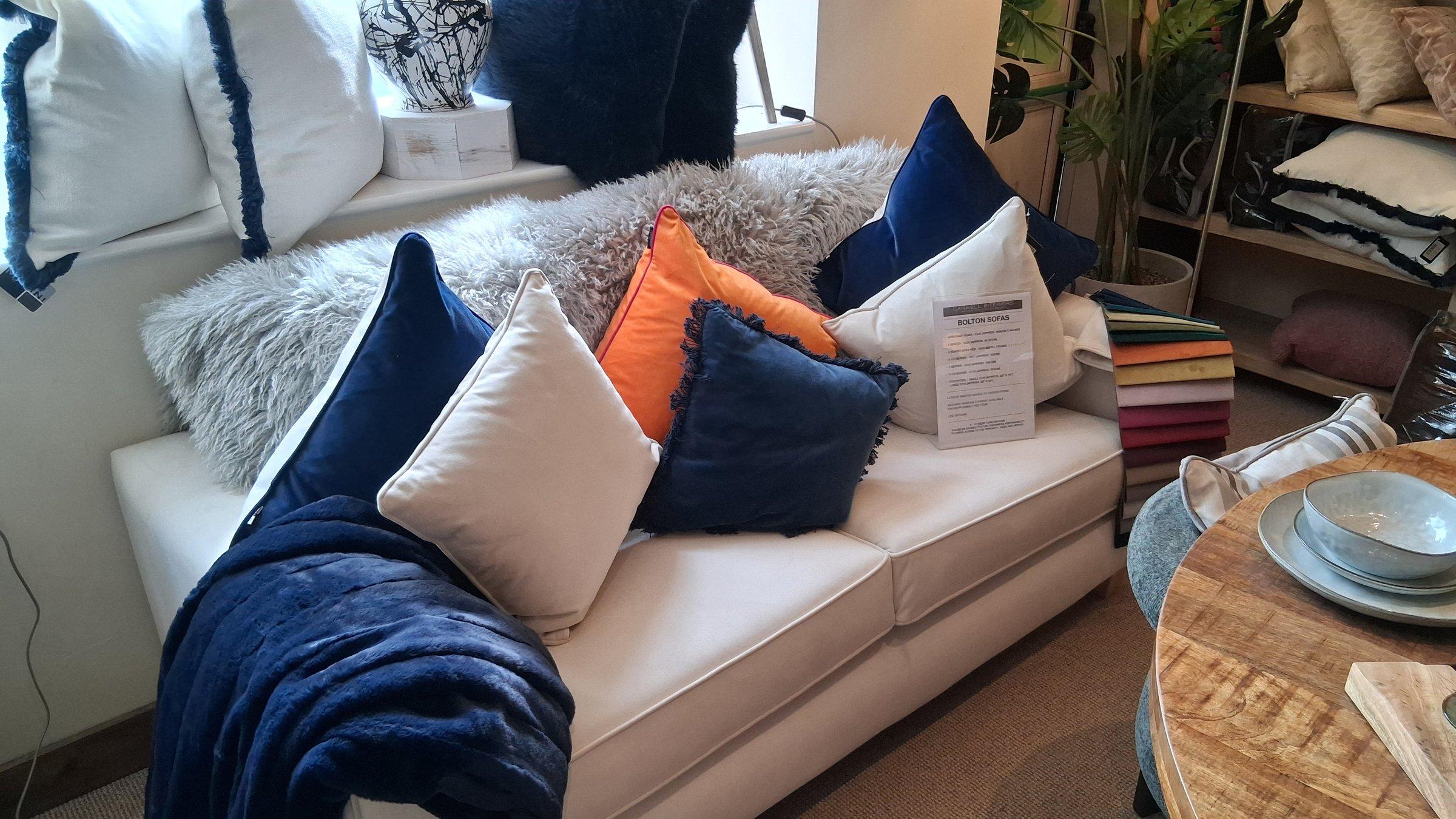
A sofa is one of the few pieces of furniture in a house that everyone in the family uses every day, often for fifteen years or more. Most regret over sofa purchases is about how it feels, not how it looks, and the way to avoid that is to spend more time choosing one than the average customer does.
Most people buy a sofa in under an hour, often after looking at it for ten minutes and sitting on it for two. This piece is about what to do differently. It comes from forty years of selling sofas, watching customers come back delighted, watching some come back unhappy, and learning which decisions matter and which don't.
Fabric first
The fabric is the decision you'll live with longest, so it's the one to start with rather than save for the end. Velvet looks rich on day one but flattens in the seating area faster than people expect; linen creases beautifully if you accept that's part of the look, badly if you don't; boucle is forgiving with light wear but harder to clean; leather softens for years and is the easiest with kids and dogs but reads cooler in winter; performance fabrics have caught up enough to be a genuine option, especially for households with toddlers. Pick the fabric for the room and the household first, then choose a frame that comes in it.
Frame quality
You can't see a frame, which is why cheap sofas get away with bad ones. What to ask about: the frame material and how it's joined. Kiln-dried hardwood is the gold standard — it's been dried so it won't warp or creak as it ages. Softwood frames can be perfectly good if they're properly engineered; quality plywood is actually excellent and unfairly maligned. What ages badly is chipboard and frames that are only stapled and glued. The joints tell you most: dowelled and screwed corner blocks at every stress point are the mark of a frame built to be sat on hard for fifteen years. Then the test anyone can do in a showroom: lift one front corner of the sofa a few inches. If the other front leg comes up with it promptly, the frame is rigid. If the sofa twists and the other leg stays down, walk on. And ignore the marketing words — "engineered hardwood solution" can mean almost anything. Ask the question in plain English and see whether you get a plain answer.
Seat cushion construction
Three honest options, and the right one depends on who's sitting. Pure foam is the tidy one: it holds its shape, needs no plumping, and gives a firmer, more supported sit — the right answer for anyone with a bad back or anyone who hates a "sat-in" look. Quality matters enormously though; cheap low-density foam is why five-year-old sofas have a dip in the favourite seat. Ask about the foam grade, not just "foam". Feather-wrapped foam — a foam core jacketed in feather — is the compromise most people end up happiest with: softer on first sit, still shapely, needs a weekly plump. Pure feather-and-down is the deep, sink-in, country-house sit, and it's glorious, but it demands daily plumping and it will look crumpled an hour after you've done it. Buy pure feather only if you know yourself to be a cushion-plumper. Back cushions follow the same logic, one notch softer.
The depth and back-height question
A deeper sofa is not automatically more comfortable — it's more comfortable for taller people and nappers, and actively uncomfortable for anyone whose feet leave the floor when their back touches the cushion. Seat depth is the most personal measurement on a sofa and the one showrooms talk about least. The check: sit properly back in the seat. If your knees bend naturally at the seat's edge and your feet sit flat, the depth is right for you. If you have to perch forward or stuff a cushion behind you, it isn't, however lovely the arm detail is. Back height divides households the same way: low backs look elegant and keep a room feeling open, high backs actually support a head on a Sunday afternoon. Couples a foot apart in height should both do the sit test on every candidate — the sofa has to fit the household, not the average of it.
The room dimensions check
Sofas grow on the drive home. A sofa that looked modest in a big showroom arrives enormous in a cottage sitting room, so measure twice before falling in love. The room first: walk space around the sofa (a generous doorway-to-seat route, not a sideways shuffle), distance to the television if that matters, and what the sofa does to the window line and the fire. Masking tape on the floor in the sofa's actual footprint tells you more than any amount of squinting. Then the journey: front door width, hall turns, internal doorways, stair winders if it's going up. Older Cotswold houses are the worst case — low lintels, narrow halls, doors in corners. Measure the tightest point of the route and check it against the sofa's packed dimensions, not just its width; some sofas come with removable feet and arms precisely for this, and it's worth asking. We've measured doorways on home visits before ordering more than once, and it has saved several sofas from a life in the garage.
The two-hour test
Fifteen minutes in a showroom is genuinely too short for a fifteen-year decision. Wear normal clothes, not a coat. Sit how you actually sit at home — feet up, sideways, slumped — not how you sit politely in public. Stay there. Read something. Comfort problems with sofas are almost never apparent in the first five minutes; the seat that's slightly too firm, the back that hits your shoulders in the wrong place, the arm at the wrong height for your head — these reveal themselves at minute twenty, not minute two. Come back a second day if you're between two candidates; your back will have an opinion the morning after a long sit that it didn't have in the moment. Any showroom that hurries you off a sofa is telling you something about what comes after the sale. We'd rather you treated ours like a waiting room.
Warranty and what it covers
The number on the warranty matters less than what it actually covers. A meaningful warranty covers the frame and the suspension for ten years or more — those are the parts that fail through fault rather than use. Cushion interiors usually carry a much shorter term, and that's honest rather than mean: foam softening over years is wear, not defect. What to read for: whether fabric wear, pilling, and fading are excluded (they almost always are), whether the warranty survives professional cleaning, and who deals with a claim — the shop you bought from, or a claims line owned by an insurer. The aftercare question matters more than the paperwork: ask what actually happens if a cushion fails in year three. The useful answer names a person and a process. The wrong answer is a shrug towards the manufacturer. Buy the sofa from whoever gave the useful answer.
The questions to ask before you commit
Five questions, in the order that catches the most regret. One: what is the frame made of and how is it joined — and can I have that in writing? Two: what grade of foam or filling is in the seat cushions, and what will this seat feel like in five years? Three: what are the packed dimensions, and will it physically get into my room? Four: how does this fabric handle my actual household — the dog, the toddler, the south-facing window? Five: if something goes wrong in year three, who exactly do I call? A good showroom answers all five without flinching. If you get five straight answers, the sofa is probably as honest as the people selling it.
For the full sofa range, see sofas at Canwell, the Richmond Interiors range, or the Hills Furniture range. To talk it through with someone, book a design consultation.